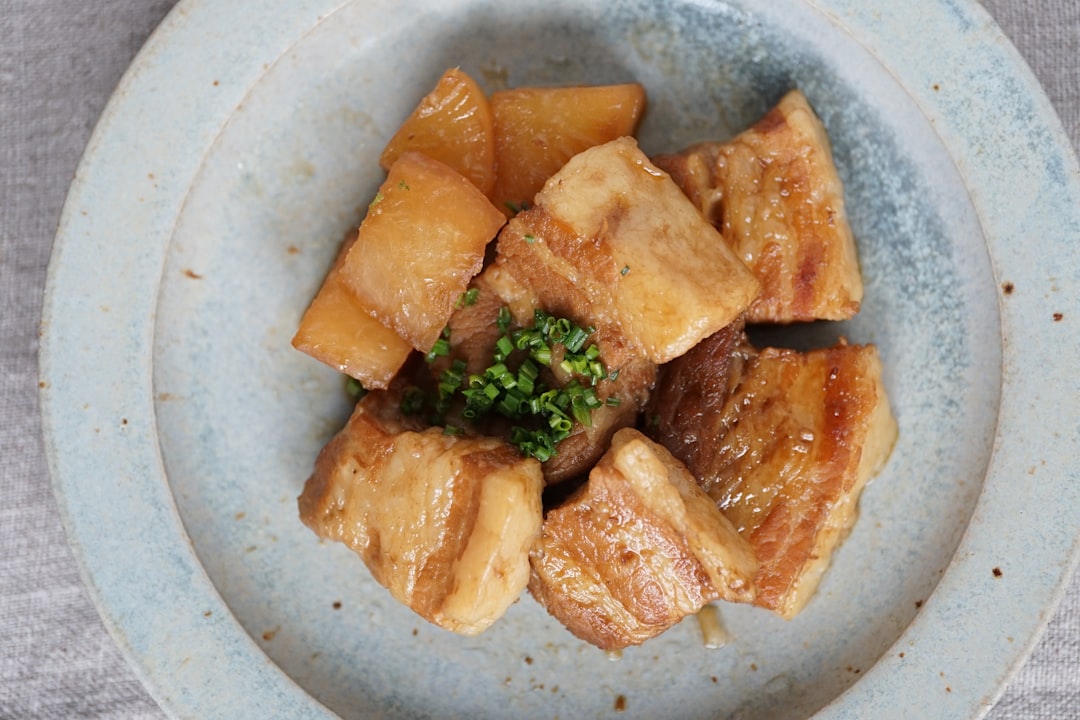
Kakuni: The Soul of Japanese Comfort Food
Kakuni, a traditional Japanese dish of slow-braised pork belly in a rich soy-mirin sauce, is a staple of comfort food that warms the hearts and souls of those who taste it. However, its simplicity belies the complexity of flavors and techniques involved, making it a dish that is frequently misunderstood and poorly executed. What makes kakuni truly special is the harmonious balance of sweet, savory, and umami flavors, combined with the tender, melt-in-your-mouth texture of the pork belly.
The Philosophy Behind Kakuni
The key to a successful kakuni lies in the philosophy of “nimono,” or Japanese braising, which emphasizes the importance of patience, gentle heat, and precise control over the cooking process. This approach allows the pork belly to absorb the deep, velvety sauce, while retaining its tender, unctuous texture. The result is a dish that is at once comforting, refined, and deeply satisfying.
A basic kakuni recipe typically includes pork belly, soy sauce, mirin, sake, sugar, and aromatics such as ginger, garlic, and green onions. However, the proportions, preparation, and cooking techniques can vary significantly, and it is these details that separate a mediocre kakuni from a truly exceptional one.
The full recipe below covers exact weights, step-by-step technique, and the pro details that make the difference. Whether you’re a seasoned chef or an adventurous home cook, mastering the art of kakuni will elevate your understanding of Japanese cuisine and delight your taste buds.
Kakuni Recipe (Serves 4)
Ingredients:
- 800g pork belly, skin removed
- 120g soy sauce
- 80g mirin
- 50g sake
- 20g granulated sugar
- 20g grated ginger
- 4 cloves garlic, sliced
- 4 green onions, thinly sliced
Step-by-Step Instructions
Preheat your oven to 140°C (284°F). In a large Dutch oven or heavy pot, combine the soy sauce, mirin, sake, sugar, ginger, and garlic. Bring the mixture to a boil over medium heat, then reduce the heat to low and simmer for 10 minutes, or until the sauce has thickened slightly and reduced by about 20%.
Add the pork belly to the pot, making sure that it is fully submerged in the sauce. If necessary, add a small amount of water to cover the pork. Cover the pot with a lid and transfer it to the preheated oven. Braise the pork for 2 1/2 hours, or until it is tender and easily shreds with a fork.
Remove the pot from the oven and let it cool slightly. Remove the pork from the sauce and slice it into thick, rectangular pieces. Strain the sauce through a fine-mesh sieve into a clean saucepan, discarding the solids. Bring the sauce to a boil over medium heat and cook until it has thickened to your liking, stirring frequently.
To serve, place a piece of the braised pork on a plate or in a bowl, and spoon the hot sauce over the top. Garnish with thinly sliced green onions and serve immediately.
Pro Tips
- Use a high-quality soy sauce and mirin to ensure the best flavor in your kakuni.
- Don’t overcook the pork belly, as it can become dry and tough. Instead, aim for a tender, melt-in-your-mouth texture.
- Let the pork rest for at least 30 minutes before slicing and serving, as this will help the meat to retain its juices and texture.
- Using too much sugar, which can make the sauce overly sweet and cloying.
- Not straining the sauce, which can leave it cloudy and unappetizing.
- Overcooking the pork, which can make it dry and tough.
Storage and Reheating Notes
Kakuni can be stored in the refrigerator for up to 3 days, or frozen for up to 2 months. To reheat, simply place the pork and sauce in a saucepan and heat over low heat, stirring frequently, until the pork is warmed through and the sauce is hot and bubbly.






コメント