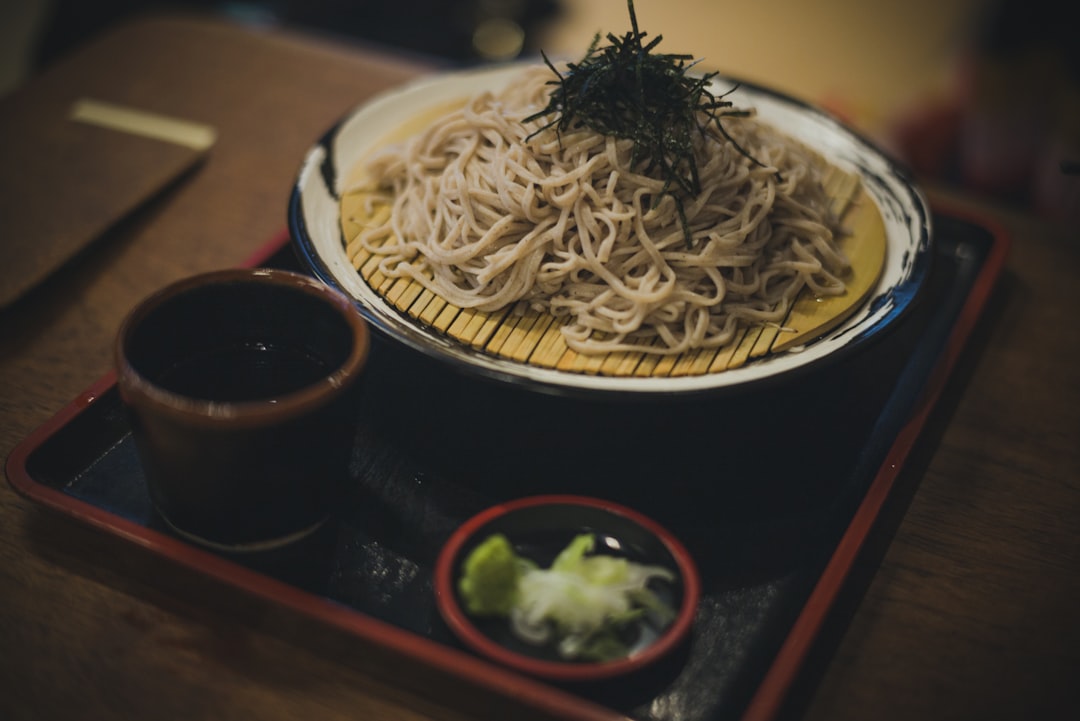
Zaru Soba: Cold Buckwheat With Tsuyu Dipping Sauce
Zaru soba, a traditional Japanese dish of cold buckwheat noodles served with a savory dipping sauce, is often misunderstood and poorly executed outside of Japan. What makes this dish special is the delicate balance of flavors and textures, which requires a deep understanding of the key technique behind it: the art of harmony and restraint.
The Philosophy Behind Zaru Soba
The philosophy of zaru soba is rooted in the concept of “less is more.” The dish relies on the quality of its ingredients and the simplicity of its preparation to showcase the natural beauty of the buckwheat noodles and the dipping sauce. This approach requires a great deal of restraint and attention to detail, as the goal is to create a harmonious balance of flavors and textures that is both refreshing and satisfying.
The basic ingredients for zaru soba include buckwheat soba noodles, tsuyu dipping sauce (made with dashi broth, soy sauce, and mirin), and various garnishes such as grated daikon, sliced scallions, and wasabi. The quality of these ingredients is crucial, as they will ultimately determine the flavor and texture of the dish.
So, what makes zaru soba so elusive to replicate? The answer lies in the subtle nuances of the dish, from the perfect balance of sweet and savory flavors in the tsuyu sauce to the ideal texture of the soba noodles. The full recipe below covers exact weights, step-by-step technique, and the pro details that make the difference.
Complete Recipe: Zaru Soba with Tsuyu Dipping Sauce (serves 4)
Ingredients:
- 200g buckwheat soba noodles
- 400ml dashi broth (made with 20g Kombu seaweed and 10g Katsuobushi bonito flakes)
- 100ml soy sauce
- 50ml mirin
- 20g grated daikon
- 10g sliced scallions
- 5g wasabi paste
Step-by-Step Instructions
Begin by preparing the dashi broth: In a medium saucepan, combine 400ml of water with 20g of Kombu seaweed. Heat the mixture over medium heat (65°C/150°F) for 10 minutes, then remove the Kombu and add 10g of Katsuobushi bonito flakes. Bring the mixture to a boil, then reduce the heat to low (50°C/120°F) and simmer for 5 minutes. Strain the broth through a fine-mesh sieve into a clean bowl and discard the solids.
To make the tsuyu dipping sauce, combine the dashi broth, soy sauce, and mirin in a small saucepan. Bring the mixture to a simmer over medium heat (60°C/140°F) and cook for 5 minutes, or until the sauce has thickened slightly. Remove from heat and let cool to room temperature.
Cook the soba noodles according to the package instructions: typically, this involves boiling them in a large pot of salted water (10g of salt per liter) for 3-5 minutes, or until they are slightly firm in the center. Drain the noodles and rinse them under cold running water to stop the cooking process.
To serve, place the cooked soba noodles on a bamboo mat or a colander lined with paper towels. Serve the noodles with the tsuyu dipping sauce, garnished with grated daikon, sliced scallions, and wasabi paste.
Pro Tips
- Use high-quality ingredients: The flavor and texture of the dish rely heavily on the quality of the ingredients, so be sure to use fresh and authentic components.
- Adjust the seasoning: The tsuyu sauce should be balanced and harmonious, so taste and adjust the seasoning as needed to achieve the perfect balance of sweet, savory, and umami flavors.
- Pay attention to texture: The soba noodles should be slightly firm in the center, while the tsuyu sauce should be smooth and velvety. Adjust the cooking time and temperature as needed to achieve the ideal texture.
Common Mistakes to Avoid
- Overcooking the noodles: This can result in a mushy, unappetizing texture. Cook the noodles until they are slightly firm in the center, then rinse them under cold running water to stop the cooking process.
- Using low-quality ingredients: The flavor and texture of the dish rely heavily on the quality of the ingredients, so be sure to use fresh and authentic components.
Storage and Reheating Notes
The cooked soba noodles can be stored in an airtight container in the refrigerator for up to 24 hours. The tsuyu dipping sauce can be stored in an airtight container in the refrigerator for up to 3 days. To reheat the sauce, simply warm it over low heat (50°C/120°F) until it is smooth and velvety. Serve the noodles and sauce chilled, garnished with fresh garnishes as desired.





コメント