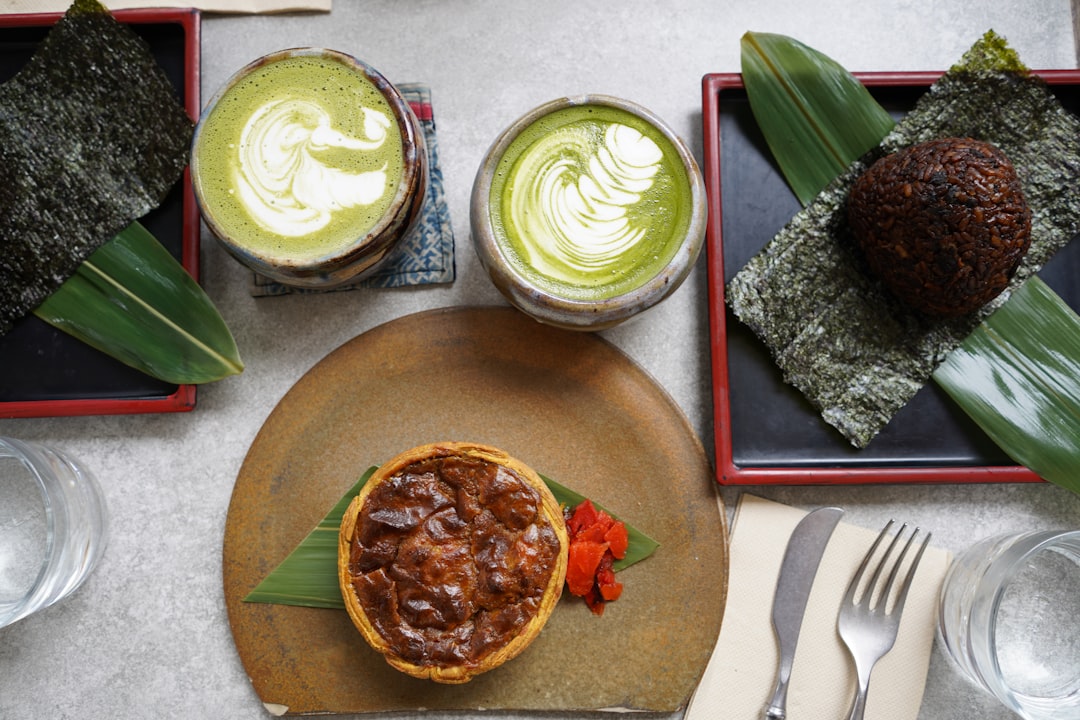
Onigiri are rice balls. But calling them that is like calling a croissant “baked flour.” Onigiri are a complete unit of Japanese portable food culture — convenient, satisfying, infinitely variable, and impossible to eat badly.
Every konbini in Japan sells them. Every school child eats them at lunch. Every train station has a dedicated onigiri shop. They are as fundamental to Japanese food culture as a sandwich is to British culture — and like a sandwich, the quality range is enormous.
The Rice Is Everything
Onigiri are made from Japanese short-grain rice (the same rice from our Japanese Rice guide). The starch content is what makes them hold together. You cannot make a proper onigiri from long-grain rice — it crumbles. It needs to be warm (not hot, not cold) when you form it.
Important: Do not season the rice for onigiri with sushi vinegar. The salt in the seasoning below + the nori is all the flavor you need.
Method (makes 4 onigiri)
You need:
- 2 cups cooked Japanese short-grain rice (still warm)
- Salt for your hands
- 4 half-sheets of nori (cut full sheets in half)
- Your filling of choice (below)
Step 1: Prepare your hands
Wet both hands with cold water. Pour a generous pinch of salt into your palm and rub hands together. The wet-salt combination stops rice from sticking and seasons the outside of the onigiri.
Step 2: Form the ball
Take roughly ½ cup of warm rice in your palm. Press a small indent in the center. Add 1-2 teaspoons of filling. Close the rice around it.
Step 3: Shape
Cup both hands in a triangular shape (thumbs form one corner). Press firmly 3-4 times, rotating the onigiri to create a triangle shape. The rice should be compact — not crumbly, not mashed. You’ll feel the right pressure after the first attempt.
Step 4: Wrap with nori
For immediate eating: wrap a strip of nori around the widest part and eat. For meal prep: keep nori separate (in a small piece of plastic wrap beside the onigiri) and wrap just before eating so it stays crisp.
The 5 Classic Fillings
1. Umeboshi (pickled plum)
The classic. Sour, salty, preserved — one pit in the center of each onigiri. Use high-quality umeboshi (not the commercial sweet versions).
2. Tuna Mayo (シーチキンマヨ)
The #1 bestselling onigiri flavor in Japanese convenience stores. Canned tuna drained completely + Kewpie mayonnaise + tiny pinch of salt. Mix until thick and creamy.
3. Salmon (焼き鮭)
Grilled or roasted salmon, flaked into small pieces. Season with a pinch of salt and black sesame seeds. Simple and deeply satisfying.
4. Kombu (昆布)
Simmered kombu seaweed cooked in soy sauce and mirin until sticky and sweet. Available pre-made in jars at Japanese grocery stores.
5. Mentaiko (明太子)
Spicy marinated pollock roe. Rich, slightly fiery, completely addictive. Mix with a small amount of Kewpie mayo for “mentaiko mayo” onigiri.
Storage
Onigiri are best eaten within 2-3 hours of making. If storing longer, wrap in plastic film and refrigerate — but rice hardens in the fridge. To revive, microwave 30 seconds and eat warm. Never leave onigiri at room temperature more than 4 hours (the filling can spoil).



コメント