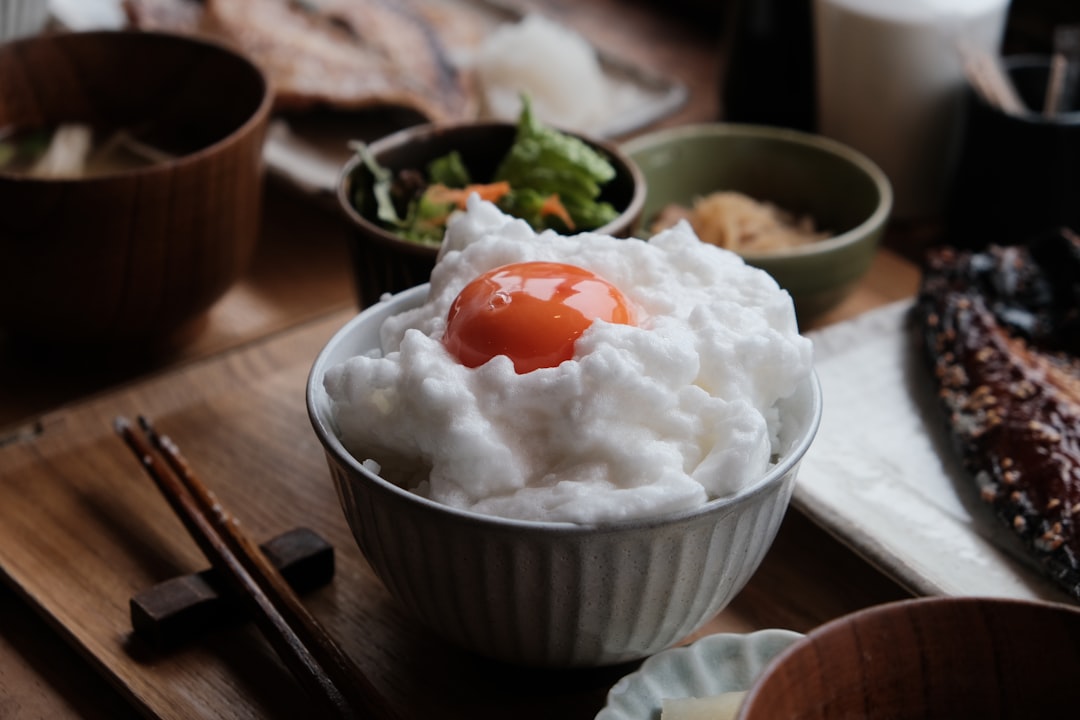
Japanese restaurants in Japan have one advantage over your kitchen that has nothing to do with skill: a dedicated rice cooker that cost ¥30,000–¥100,000, calibrated to the specific water hardness of the local tap water, and loaded with rice grown within 50km of the restaurant.
You can’t replicate that. But you can get much closer than you currently are.
The Three Problems With Western Rice
1. Wrong rice variety. Japanese rice (japonica) is short-grain and starchy. Long-grain varieties like basmati or jasmine don’t behave the same way. They won’t achieve the sticky-but-distinct texture that makes Japanese rice special.
2. Not washing. Japanese rice must be washed 3-4 times before cooking to remove surface starch. Skip this and the rice is gluey. The water should run nearly clear before you cook.
3. Wrong water ratio. Most bag instructions are wrong for Japanese rice. The correct ratio is 1:1.1 (rice to water by volume), not 1:2.
The Right Rice
Buy Japanese short-grain rice. In the UK/US/EU, look for brands like Nishiki, Koshihikari, or Yume Nishiki. Korean short-grain rice is a good substitute — it’s grown to similar specifications. Never buy “sushi rice” — that’s just a marketing term for regular short-grain rice at 3x the price.
Method (serves 4)
- 300g (2 cups) Japanese short-grain rice
- 330ml cold water
Step 1: Wash until clear
Place rice in a bowl, cover with cold water. Swirl vigorously. The water turns milky white — drain it. Repeat 3-4 times until the water is mostly clear. This removes excess surface starch that causes gluiness.
Step 2: Soak (optional but recommended)
Let washed rice soak in fresh cold water for 30 minutes. This hydrates the grain core evenly. The rice will plump slightly. Drain before cooking.
Step 3: Cook
If using a rice cooker: Add washed/soaked rice + 330ml water. Press the button. Don’t open the lid during cooking.
If using a pot: Add rice and cold water to a heavy-bottomed pot. Cover tightly. Bring to a boil on high heat. Reduce to minimum heat. Cook 12 minutes. Do not open the lid. Turn off heat. Rest 10 minutes with lid on.
Step 4: The steam rest
The 10-minute rest is not optional. The steam continues cooking the exterior grains. Opening the lid early releases the steam and you get dry, uneven rice.
Step 5: Fold, don’t stir
Use a wooden rice paddle or flat spatula. Fold the rice from the outside in, turning and separating gently. Stirring with a spoon crushes the grains and releases excess starch.
For Sushi or Onigiri
Season hot rice with sushi vinegar (mix 3 tbsp rice vinegar + 2 tbsp sugar + 1 tsp salt, dissolved over low heat). Fold in while fanning to cool quickly. The rice should be glossy and sticky but each grain should still be distinct. Work quickly — sushi rice hardens fast at room temperature.


コメント